
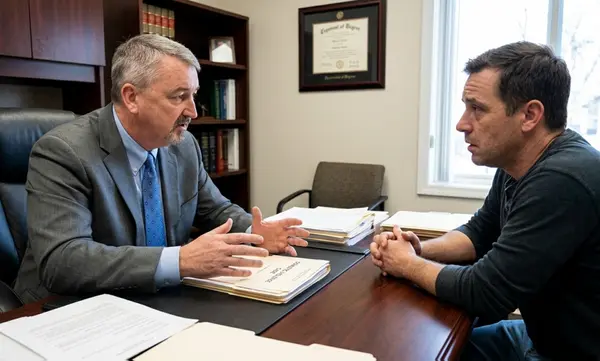
A domestic violence charge can turn your life upside down overnight. It can cost you your home, your job, and your relationship with your children. But not every case ends in conviction. In Florida, prosecutors can reduce or dismiss charges for a number of legitimate legal reasons. Knowing those reasons and acting quickly can make all the difference. Seven key factors can lead prosecutors to drop this charge, and this guide covers them all.
1. The Alleged Victim Recants Their Statement
When the alleged victim recants, it weakens the prosecution’s case. Hiring a lawyer for domestic violence charge cases early gives you the best chance of using this to your advantage. Under Florida Statute § 741.2901, the State Attorney’s Office — not the victim — decides whether to proceed. A credible, timely recantation can still persuade prosecutors to drop or reduce the charge.
2. Lack of Physical Evidence
No photos. No injuries. No witnesses. Just one person’s word against another. When the prosecution has nothing concrete to back up the accusation, their case starts falling apart. A skilled defense attorney can step in and argue that the state simply does not have enough to prove its case.
3. False or Exaggerated Allegations
It is not uncommon for a family domestic violence charge to stem from a divorce or custody dispute. If your attorney can show the alleged victim had a motive to fabricate, such as gaining leverage in a child custody case, a prosecutor may decline to move forward with the charge.
4. Self-Defense
You had every reason to be scared. You acted to protect yourself. Florida’s Stand Your Ground law covers domestic situations, and if the evidence backs your story, self-defense is a legitimate legal argument. In many cases, it is enough to get the charge dismissed entirely.
5. Inconsistent or Contradictory Evidence in a First-Time Domestic Violence Charge
Think about it — one argument, one night, one person’s version of events. That is all the prosecution may have. But one story does not always hold up. Text messages, surveillance footage, or witness accounts can poke holes in the accusation fast. A criminal defense attorney who digs deep can find those inconsistencies and use them to fight for you.
6. Constitutional Violations During the Arrest
Here is something most people do not know. Officers are legally required to follow strict procedures in domestic violence arrests. Skip a step, cut a corner, cross a line, and suddenly, the evidence they collected may not be allowed in court. Your attorney can use that against the prosecution and fight to get the charge weakened or dropped altogether.
7. Pre-File Intervention by a Defense Attorney
Most people wait. They assume the process has to play out, and there is nothing they can do yet. That is a costly mistake. The window right after an arrest, before the state formally files anything, is actually your most powerful moment. Bottom line: a lawyer for domestic violence charge cases can contact the State Attorney’s Office before the state formally files charges, present the facts, and stop the case before it ever gets started.
Beyond the 7 Reasons: Key Facts About Domestic Violence Charges
-
When the Charge Becomes a Felony
Whether you face a misdemeanor or a felony depends on the circumstances of your case. Most first-offense battery charges in Florida are misdemeanors. However, certain factors can elevate the charge. Strangulation is typically charged as a third-degree felony under Florida law. If you are facing felony-level charges, speak with an experienced domestic violence defense attorney right away. Note that a domestic violence felony charge can result from prior convictions, serious bodily harm, or weapon use.
-
Pretrial Options for First-Time Offenders in Florida
First time does not have to mean the worst time. Florida offers pretrial diversion programs that let qualifying defendants complete court-ordered programs and walk away without a conviction on their record. A clean prior record and the right legal strategy open more doors than most people realize. An experienced attorney can look at your specific case and figure out the best path forward.
-
Expungement After a Domestic Violence Strangulation Charge
Your record does not have to follow you forever. If your charge was dropped or dismissed, Florida may allow you to have it expunged or sealed. A conviction is a different story — Florida does not allow that. There are waiting periods and eligibility requirements involved, and the process requires a formal petition. A criminal defense attorney who knows Florida’s expungement laws can tell you exactly where you stand.
Work With an Experienced Defense Attorney in Northwest Florida
If you are facing a domestic violence charge, your next move matters more than you know. The Law Offices of T. Martin Knopes has defended clients throughout Northwest Florida and Southern Alabama for over 30 years. Attorney Knopes is a former assistant state attorney, so he knows how prosecutors think and how to build a defense that works. Do not wait to get legal help. Call 850-683-0700 or visit the contact page to schedule a free consultation.
Frequently Asked Questions
Can the victim drop domestic violence charges in Florida?
No, the alleged victim cannot personally drop a domestic violence charge in Florida. The State Attorney’s Office controls the decision to prosecute. The state can proceed even if the victim recants or refuses to cooperate. That said, a victim’s lack of cooperation can weaken the case. If the alleged victim signs an affidavit of non-prosecution and there is limited physical evidence, prosecutors may choose to dismiss the case. A skilled defense attorney can use this to build a stronger argument for dropping the charge.
What happens if you get a domestic violence charge for the first time?
A first-time domestic violence charge in Florida can still carry serious consequences, but you may have more options than you think. Eligible defendants may qualify for pretrial diversion programs. Completing these can result in the charge being dropped. Your attorney can also argue for dismissal based on lack of evidence, self-defense, or false allegations. It does not guarantee a conviction. Early legal representation significantly improves your outcome and helps protect your record from long-term damage.
Is domestic violence strangulation a felony in Florida?
Yes. A domestic violence strangulation charge is treated as a serious felony in Florida. Strangulation, defined as intentionally impeding another person’s breathing or blood flow, is typically charged as a third-degree felony. That means up to five years in prison, fines, and a permanent criminal record. A felony charge at this level also carries the same collateral consequences as other felonies. For example: loss of firearm rights, employment difficulties, and more. If you are facing this charge, contact a defense attorney immediately.
